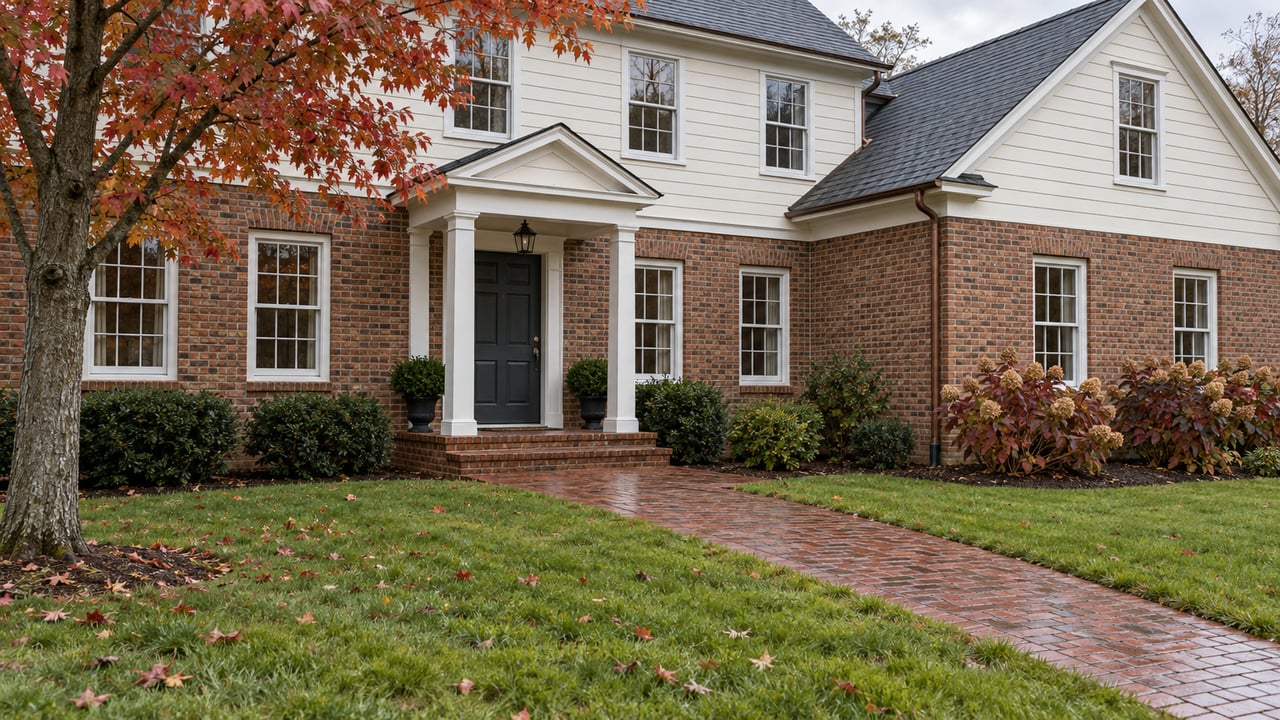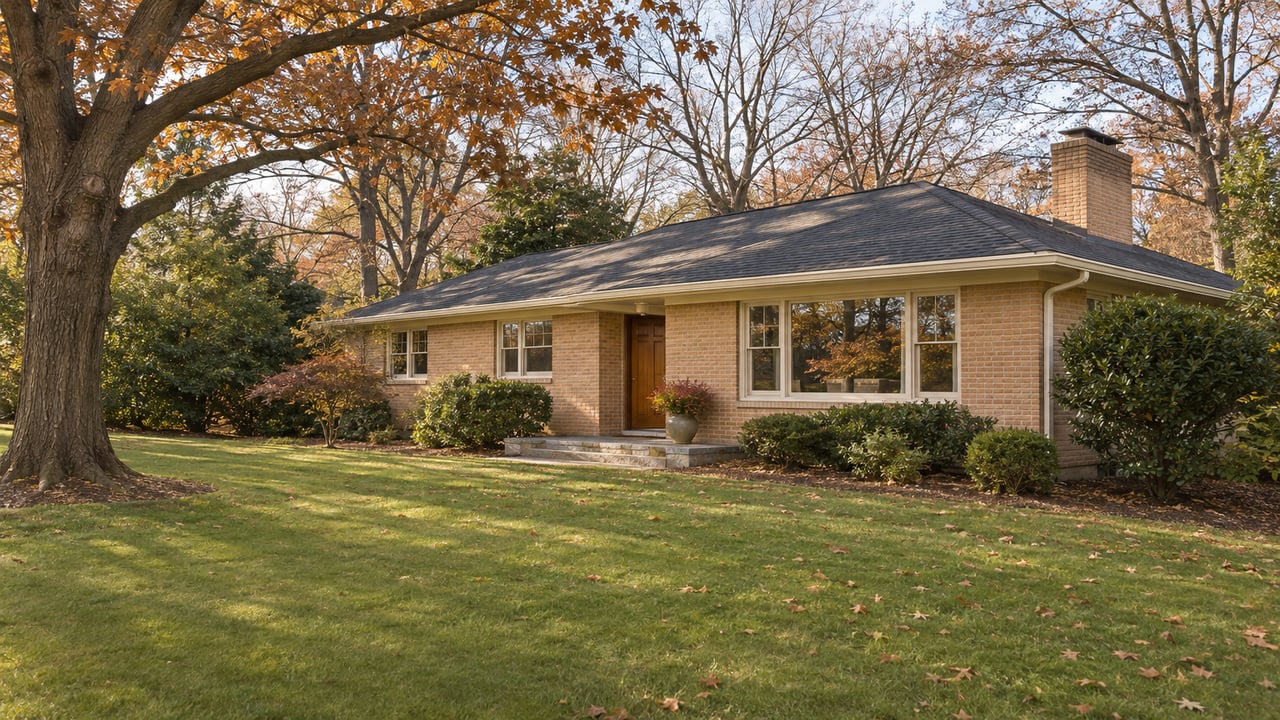
In January 2016, Bethesda Magazine described two blocks of Kingswood Road in Fleming Park where four new homes were under construction and two older houses were reportedly being prepared for demolition. The magazine reported that one homeowner nearby was getting postcards about once a week asking whether she wanted to sell. The older Cape Cods and ramblers were being replaced with homes of more than 7,000 square feet. In one case Wormald Homes paid $620,000 for the house at 5808 Kingswood Road, and new homes nearby were priced from $1.3 million to $1.6 million.
That was nearly eleven years ago, and prices have risen since. In 2024, Montgomery Planning was still describing replacement homes as the main kind of redevelopment in the county's established single-family neighborhoods. If you are a family looking for a detached house in Bethesda with about $1.0 to $1.3 million, other families are only part of your competition. In several neighborhoods you are also shopping in the exact price band where replacement-home builders buy. A builder doesn't value the house at all. It values the lot.
What a builder pays for, and why it sets the floor
Montgomery Planning studied this business for its 2024 Attainable Housing Strategies report. The department counted 683 replacement homes built across the county since 2011. The original houses averaged 1,500 gross square feet and the replacements averaged 3,730. Over that period, builders paid an average of $640,000 for the original properties and sold the new homes for an average of $1,635,000. The report named Chevy Chase, Bethesda, Kensington and Silver Spring/Takoma Park as the centers of that activity.
A local builder put the logic in one sentence. In an October 2024 story on new-home construction in Glenbrook Village, The Wash quoted Paramount Construction: "Since there are very few large parcels of land remaining in Bethesda, builders and developers are buying old homes and tearing down the house to get to the land. Yes, in many cases, the land that old functionally obsolete house sits on is more valuable than the house."
For a buyer, this changes what a dated kitchen or a 1950s floor plan does to the price. In a neighborhood with builder demand, a small, tired house doesn't fall to whatever a family would pay for a fixer-upper. Its price stops at about what the lot is worth to someone planning to build a much larger house there. The house can be in poor condition and the price still holds up, because the builder is not paying for the house.
The price band builders shop in
The Planning report also showed where builders shop. They target homes selling for 30 to 70 percent of a neighborhood's average sale price, and the new homes they build sell for more than 130 percent of it. The department looked at the ten neighborhoods with the most replacement homes. From 2017 through 2019, builders bought 121 of the 349 properties that sold in that lower band, about 35 percent. Over the same years, new replacement homes made up 153 of the 367 sales above 130 percent of the average, about 42 percent.
So in the busiest teardown neighborhoods during those years, about one of every three modestly priced houses that sold went to a builder. A family hoping for the lowest-priced house on a sought-after street was bidding against a company with a business plan for the lot.
Where $1.0 to $1.3 million falls in 2026
To place a budget against that band, you need current neighborhood prices. Bethesda Magazine's Insider's Guide chart, published October 29, 2026, covers detached homes sold from January 1 through June 30, 2026, using Bright MLS data as of August 31. These figures are a first-half-2026 snapshot, not this week's market. They still show clearly where a budget lands.
| ZIP code | Median detached sale price, Jan.–June 2026 | Sales |
|---|---|---|
| 20816 | $1,426,000 | 117 |
| 20817 | $1,425,000 | 264 |
| 20814 | $979,000 | 169 |
In 20816 and 20817, a $1.0 to $1.3 million budget sits below the median for the first half of 2026, and detached houses there sold fast, with a median of 6 days on market in 20816 and 8 in 20817. In 20814 the same budget sits above the median.
The neighborhood figures make the overlap sharper. Using the median as a rough stand-in for the average the Planning study used, the builder band runs up to about 70 percent of the neighborhood's typical price. Westmoreland Hills had a first-half-2026 median of $1,897,000 across 10 sales, and 70 percent of that is about $1.33 million. Bradley Hills Grove's median was $2,043,000 across 7 sales, which puts its upper edge near $1.43 million. Edgemoor's median was $3,725,000 across 6 sales. In any of these neighborhoods, a detached house priced between $1.0 and $1.3 million is one of the lower-priced houses there. That is the band the Planning report describes builders buying in.
The sales counts are small, from 6 to 10 houses in six months, so treat these medians as a guide to each neighborhood's price level rather than precise figures. The point holds anyway. The more expensive the neighborhood, the more likely a $1.0 to $1.3 million budget is competing with builders for the same house.
Speed is part of the competition
The first-half-2026 chart also listed the fastest-selling neighborhoods. Wood Acres had a median of 4 days on market across 7 sales. Burning Tree Estates and Glen Mar Park each had 5 days, across 3 sales apiece. Westmoreland Hills had 8 days across 10 sales.
A typical house selling in four or five days leaves a family about one weekend to see it, decide and write an offer. A builder who has already priced the lot can move just as fast, and a modest house's condition doesn't slow a builder down.
The countywide picture is calmer than it was a year ago. GCAAR's October 2026 report for Montgomery County, which covers all home types, shows a median sale price of $617,778, a median of 19 days on market, 2,407 active listings and 3.1 months of supply. Active listings were up 27.2 percent from October 2025. More inventory across the county gives buyers more breathing room in many places. It doesn't create more lots in Bradley Hills Grove or Westmoreland Hills, and builders there aren't waiting for more inventory.
What this means for a family deciding where to look
Choosing a ZIP code matters more than any single house. With $1.0 to $1.3 million, a search in 20814 aims at or above the typical detached price from the first half of 2026. The same budget in 20816 or 20817 aims below the typical price, in the band where builders have historically been active and houses sold within about a week.
Once you find an older house you love on a street of new construction, judge its price against the lots around it. If new homes are going up nearby, the price of the original house next door probably reflects what its lot is worth to a builder. A low asking price on a dated house may be an invitation for several bids, including from builders. Condition can still matter to your plans and your inspection, but in that setting it does less to lower the price than you might expect.
Families moving up from an older Bethesda house sit on the other side of this market. A buyer for a small house on a lot builders want could be a family or a builder, and in Fleming Park in 2016 builders were mailing homeowners directly to ask about selling. Knowing what your lot is worth, alongside the house, puts you in a stronger position whichever kind of buyer makes the offer. A home valuation that looks at nearby replacement-home activity is a reasonable place to start.
If you're weighing an older house in Bethesda and wondering whether a builder might be bidding too, Rosie Tomlinson is glad to talk it through with you before you write an offer. You can find more about the area on her Bethesda neighborhood page. Let's Connect.